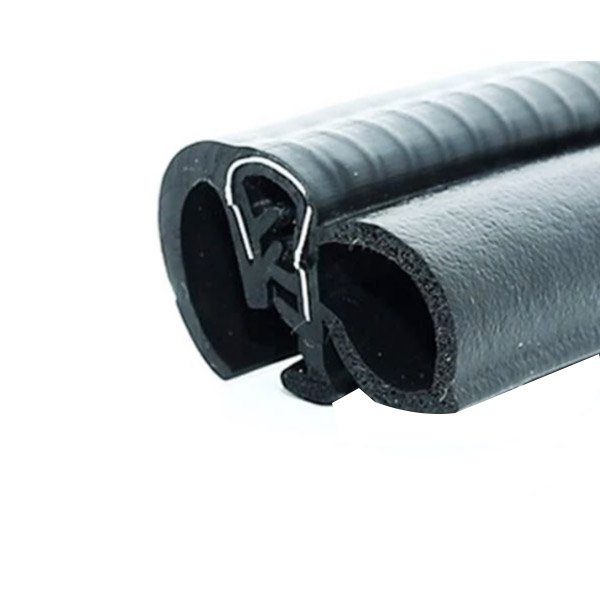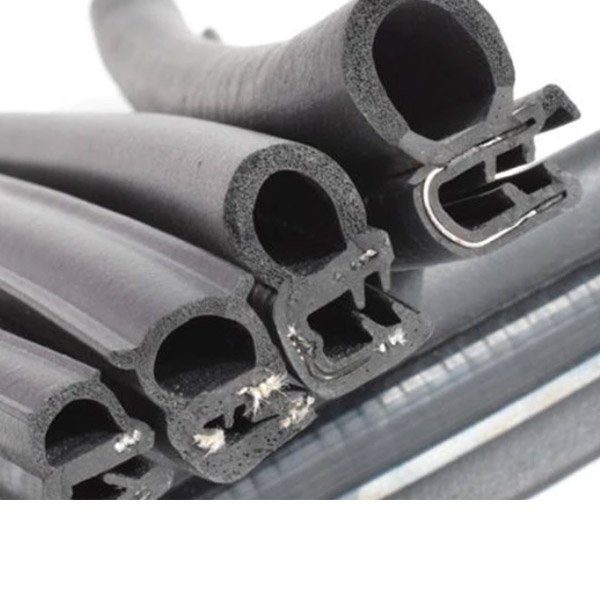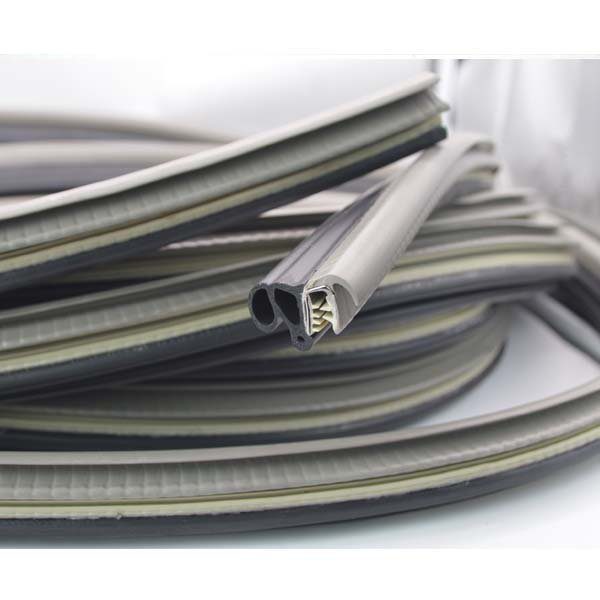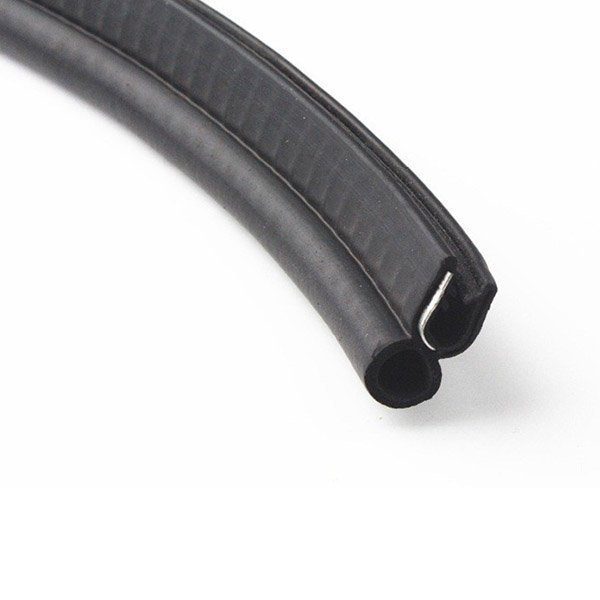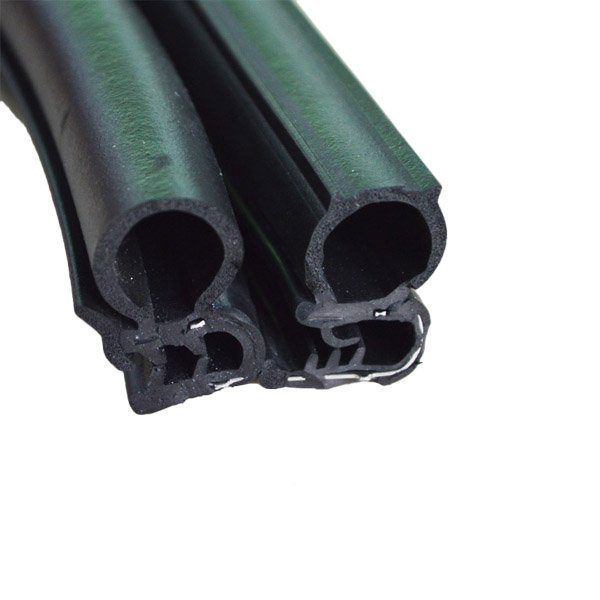
Rubber co -extrusion is when rubber and plastic (or rubber) are mixed through specific processing methods. Blendscombine the properties of both rubber and plastic (or other rubber). The two materials co-extruded still maintain theil
respective characteristics. The main purposes of Rubber co-extrusion are as follows.
View All ⇊
Co-extruded rubber seals are produced using a double or multi-stage extrusion process, where two or more different rubber compounds (usually a rigid backbone and a soft sealing lip or a dense layer combined with a sponge layer) are extruded simultaneously through one die head to form an integrated profile in one continuous operation.
Co-extruded rubber seals are widely used in automobile doors, trunk lids, sunroofs, and sliding windows; marine hatches and cabin seals; doors and windows of railway vehicles; building walls, prefabricated buildings, and container sealing systems, where both structural rigidity and soft sealing are required simultaneously.
Our manufacturing strength in co-extrusion seals is defined by Multi-Polymer Integration, enabling precise bonding of up to three material types (e.g., EPDM, Silicone, and metal insert) in one pass for optimized performance. We prioritize Die Design Expertise, utilizing advanced computational fluid dynamics (CFD) to engineer tools that ensure flawless material flow and eliminate mixing between compounds. Our Custom Profile Development team works closely with clients to tailor the density and rigidity ratios, guaranteeing the seal meets the exact force-deflection and durability standards required for extreme operating environments.
The primary advantage is achieving both structural rigidity and soft sealing in one single profile, eliminating the need for secondary assembly of separate hard and soft parts while ensuring permanent bonding between materials.
Yes, we can produce dual-color or multi-color co-extruded profiles to meet aesthetic requirements of automotive interiors, architectural facades, etc.
Co-extruded rubber seals are produced using a double or multi-stage extrusion process, where two or more different rubber compounds (usually a rigid backbone and a soft sealing lip or a dense layer combined with a sponge layer) are extruded simultaneously through one die head to form an integrated profile in one continuous operation.
Combines rigid and flexible sections in one profile for structural support and excellent sealing characteristics.
Excellent weather, UV, and ozone resistance in both dense and sponge zones.
High bonding strength between different materials without the risk of delamination.
Available in combinations of double hardness, double color, or dense lip to meet various functional requirements.
Reduces assembly steps and overall installation costs.
Co-extruded rubber seals are widely used in automobile doors, trunk lids, sunroofs, and sliding windows; marine hatches and cabin seals; doors and windows of railway vehicles; building walls, prefabricated buildings, and container sealing systems, where both structural rigidity and soft sealing are required simultaneously.
Our manufacturing strength in co-extrusion seals is defined by Multi-Polymer Integration, enabling precise bonding of up to three material types (e.g., EPDM, Silicone, and metal insert) in one pass for optimized performance. We prioritize Die Design Expertise, utilizing advanced computational fluid dynamics (CFD) to engineer tools that ensure flawless material flow and eliminate mixing between compounds. Our Custom Profile Development team works closely with clients to tailor the density and rigidity ratios, guaranteeing the seal meets the exact force-deflection and durability standards required for extreme operating environments.