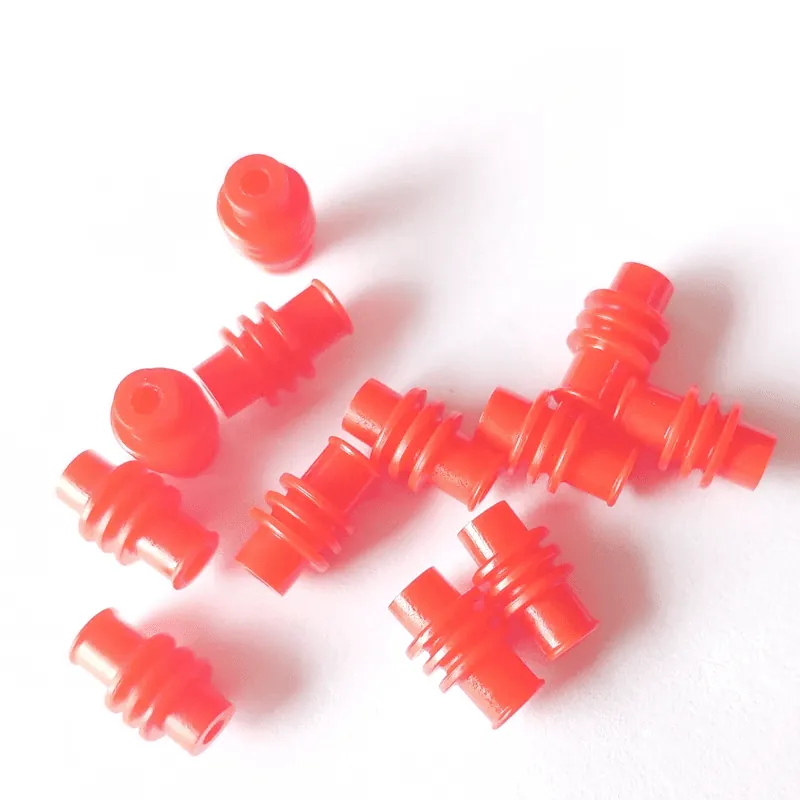
Silicone components of high performance are mainly manufactured using liquid injection molding or compressed molding.
Liquid injection casting is the preferred method for production in large volumes requiring complex geometry and narrow tolerances. It provides excellent material efficiency, excellent dimensional stability and minimal debris performance, making it an industrial standard for precise silicone parts. Compressed casting remains the choice method for large components or special products with a small volume, with lower equipment costs and greater process flexibility.
Regardless of the casting technique used, post-hardening is an important step in determining final performance. This controlled secondary vulcanization significantly reduces compression regulation, improves elastic recovery and optimizes thermal stability, thereby ensuring long-term hermetic integrity at continuous voltage. In the manufacture of high quality silicone, post-hardening is a necessary process and should not be missed.
View All ⇊
High-performance silicone components are produced through a precision molding process combined with secondary vulcanization, delivering exceptional physical properties and long-term sealing reliability even under the most demanding conditions.
Silicone rubber is non-toxic, chemically inert, and rock-steady across wild temperature swings, making it a must-have for delicate applications. Unlike everyday organic rubbers, high-performance silicone holds up against ozone, UV rays, and oxidation like a champ, delivering unmatched longevity in spots where safety and stability are non-negotiable—think medical devices, food processing gear, or outdoor electrical enclosures.
Excellent heat, chemical, and UV resistance
Low compression set for consistent sealing
Superior mechanical strength and elasticity
Available in custom durometers and shapes
Ideal for both static and dynamic sealing applications